Three volcanoes, Hasan, Melendiz and Erciyes, buried the region in ash and lava some ten million years ago. Wind and water then carved that tuff into the canyons and fairy chimneys we know today.
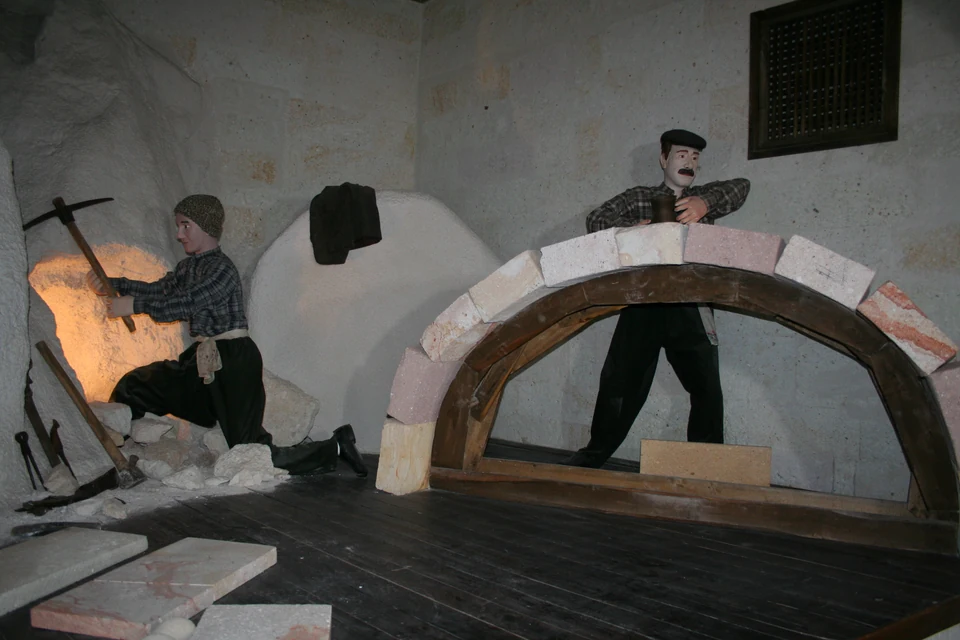
Tuff is easy to carve. For centuries it became churches, homes, stables and storerooms, cut with a pointed iron tool called the “külük”. Stone quarried from the surrounding mountains was raised into arches; houses, places of worship, caravanserais and baths stood upon them, and the skill of the Greek master masons who once lived here shaped much of what you see.
Between the stones went fine earth, later Horasan mortar bound with egg white, later still lead. These stones warm quickly and cool slowly, so the houses stay cool in summer and warm in winter. Many older people still prefer them to concrete.
Ortahisar’s rock-cut stores belong to this story. Lemons, oranges and grapefruit from the Mediterranean coast are kept for months in the constant cool of the rock, then sold throughout the year in markets all over Turkey.
From the museum's original gallery guide.